
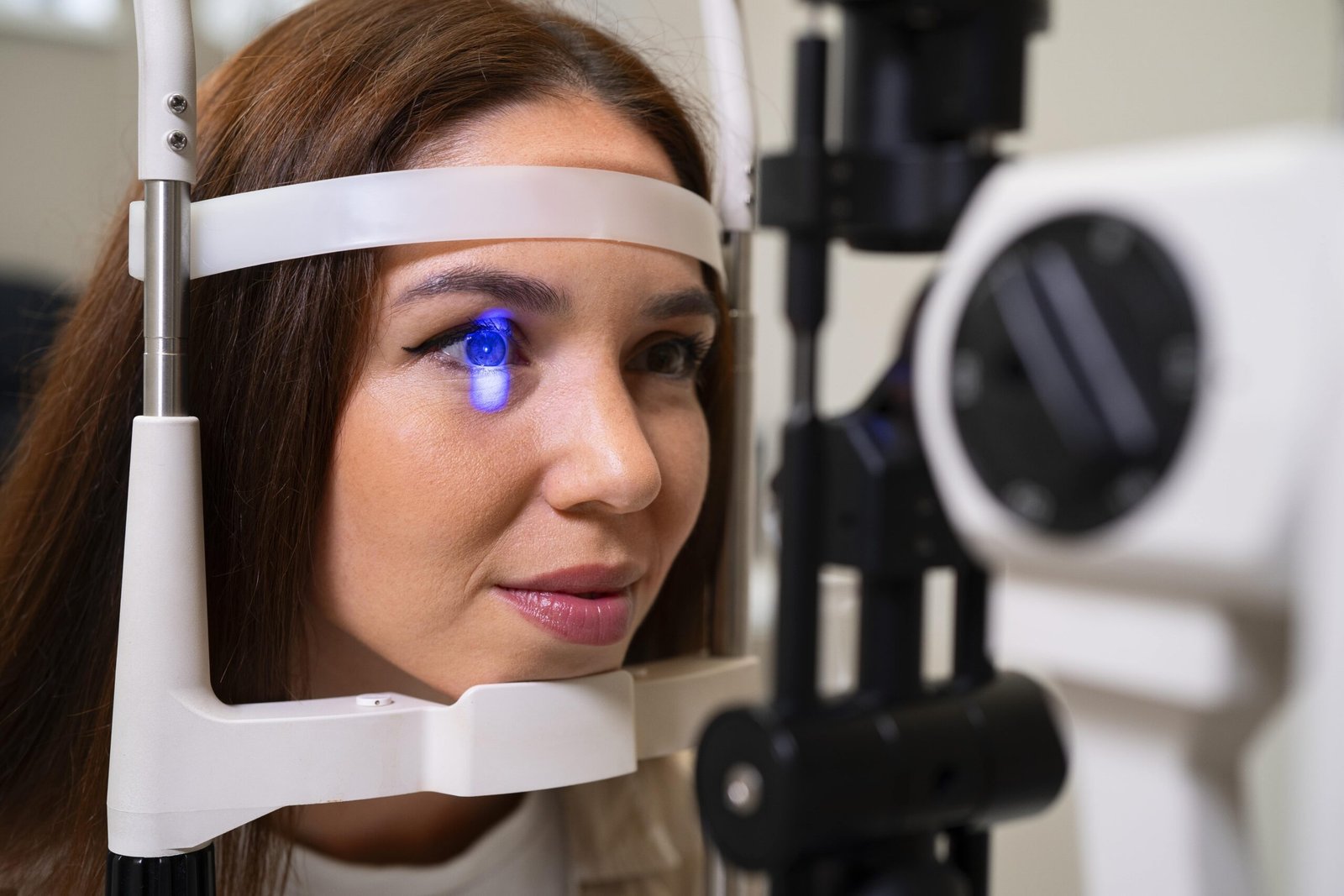
Phacoemulsification ("phaco") is the modern standard for cataract removal: the cloudy lens is broken into tiny fragments with ultrasound energy and removed through a self-sealing micro-incision of about 2–3 mm, usually without stitches, injections or hospital stay.
How phacoemulsification works
\nA fine ultrasonic probe vibrates tens of thousands of times per second, emulsifying the hardened, cloudy lens into microscopic fragments that are gently aspirated from the eye. The natural elastic capsule that held the lens is deliberately preserved — it becomes the secure pocket into which the folded intraocular lens is implanted.
\nWhy it replaced older techniques
\n| Phacoemulsification | Older large-incision surgery | |
|---|---|---|
| Incision | ~2–3 mm, self-sealing | Larger, often sutured |
| Anaesthesia | Usually drops | Often injections |
| Astigmatism induced | Minimal | More |
| Visual recovery | Days | Weeks |
| Stay | Day care | Often overnight historically |
Is phaco right for every cataract?
\nFor the great majority, yes. Extremely hard or unstable lenses occasionally need a planned larger-incision approach — this is a surgical-judgement decision made for safety, not a failure of technology. Your surgeon will mention it if it applies to you.
\nTechnology notes
\nSome centres offer femtosecond-laser assistance for steps of the procedure. Current evidence shows excellent outcomes with both conventional and laser-assisted phaco; what matters most is surgeon expertise, measurement accuracy and appropriate case selection. Claims that one machine guarantees superior results should be viewed sceptically.
Information on this page is for general education and does not replace an examination, diagnosis or personalised medical advice from a qualified eye-care professional.
Related treatments & topics
Cataract Surgeon in Mumbai
A cataract is clouding of the eye's natural lens, causing blurred vision, glare and faded colours. Surgery — removing the cloudy l…
Learn moreCataract Surgery: Procedure, Recovery & Results
Cataract surgery removes the cloudy natural lens and replaces it with a clear intraocular lens, usually via micro-incision phacoem…
Learn moreIntraocular Lens (IOL) Options: Monofocal, Toric, Multifocal & Trifocal
The intraocular lens implanted during cataract surgery comes in several designs: monofocal (one sharp distance), toric (also corre…
Learn more